20.3.13

Why auto cos Mahindra & Mahindra and Honda name their products to ride on luck

The Economic Times, Thursday, 21 March 2013

With India Gate in the background, Anand Mahindra on Monday launched the e2o, pronounced Etwo-OH- taking a familiar path for the automobile maker with a penchant for names ending in O.

All of Mahindra's model names - whether it's the SUVs like Bolero, Scorpio, Xylo, or even the XUV 500, pronounced as five double oh, or the company's two-wheelers Duro, Rodeo, Stallio and Pantero have the same ending.

Pawan Goenka, president, automotive and farm equipment sector, Mahindra & Mahindra, says after the success of Bolero and Scorpio, the company thought the 'O' at the end of the vehicle was lucky and decided to stick with it.

"You can call it a bit of superstition, but it has worked for us. It has become a tradition for us and it is now an expectation from M&M to follow that practice. Thanks to this, people easily identify an M&M product," Goenka said.

While it is a conscious decision on part of M&M, Japan's largest two-wheeler maker, Honda Motorcycle and Scooters IndiaBSE -4.88 % (HMSI) stumbled into ending all its product names with "er". Honda's motorcycles all have seven-letter names — Twister, Stunner, Dazzler, and it will soon launch a 150 cc motorcycle called Trigger.

Brand experts say having a structured nomenclature system for a portfolio is a good strategy for automakers and it helps companies reduce its marketing spend.

"Having synchronicity in a way the brand names are pronounced makes it easier to remember. M&M's product names are easily identifiable and remembered over different sounding brands of say a company like Ford. But I am not too sure, if it is a good strategy to apply the same in two-wheelers as well," said Alpana Parida, president at DY Works, a leading brand consultancy.


Interestingly, for HMSI, the non-ER ending products like Activa, Shine and UnicornBSE 0.00 % are all successful models, and contribute a major part of volumes.

And some people associated with Honda have suggested that the company switch from an "er" ending to names that end with "a" - citing the Activa's success as support.

Yadvinder Singh Guleria, VP sales and marketing, Honda Motorcycle and Scooters India, says it's just a co-incidence that so many Honda vehicles have the same sound. "It's the ultimate dream for a marketer to have one brand identified as the entire category — like we did with Activa in the automatic Scooter space. Names are decided based on the characteristics of a vehicle, it should sound easy and should not have a negative connotation in any language," he added.

With over a thousand model names in the Indian personal vehicle space, and 50-60 new models launching every year, finding a brand name that breaks the clutter is extremely tough. Brand consultant Harish Bijoor says naming auto brands is a mix of logic and neuroscience.

"It is an industry where product is forever on the move, so one should have actionoriented names. Companies need to build in ubiquity and emotional value to the brand. MarutiBSE -0.53 % is the only one that has managed to build it and Mahindra is moving in that direction," Bijoor feels.

He also feels that anything ending with an 'O' is easy on the tongue and two-syllable, four-letter names are the best.

Alpana Parida is President of DY Works, a leading brand strategy and design firm.


13.2.13

TURBANSCAPE


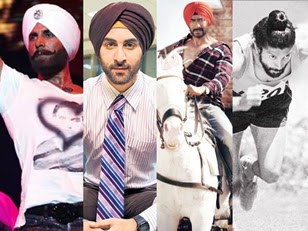
Paneer selling, paratha munching, lassi gulping, bhangra performing, romancing in sarso ke khet and  vrooming on tractors is a common picture that most of us derive of Punjab and Sikhs. Only while working on a Punjab related project did I stumble upon the fact that most of us living in the west, east or south of India have a very myopic vision about this sensitive state and its people. They sure do come across as a happy clan, who is fed well given their physique and can break into a folk song at a drop of their hat but the reality of their plight is deep rooted and is affected by layers of catastrophes that is hidden behind their cheerful yet gallant attitude to life.

It started with invasions of ancient empires of Persian, Greek and Afghan origin coupled with Alexander’s attempt to attack and the British Raj. This followed by the brutal division of the state during Partition, followed by yet another split of the state forming Haryana and Himachal Pradesh. Then came upon the worse bloody tragedy- Operation Bluestar, attacking a faiths most holiest shrine, remains a topic of great controversy and bitterness in many parts of society.  Whilst history has not been kind to the people of Punjab this fertile state still remains home to some of the world’s richest civilizations

Today the Punjab we see and form an opinion of is influenced by the dream merchants of Yash Raj Studios and Adlabs. Munda, makhna, soni, rab, kudi, mauja, tussi, puttar, chak de every second Hindi film is peppered with Punjabi. It started with Raj and Simran flirting in mustard fields, dutifully applying mehendi, observing karva chauth and doing bhangra, this has led to a burst of Punjabification phenomena from Jab We Met, Veer Zara, Dil Bole Hadippa to Love Aaj Kal and Rocket Singh. Bollywood has become a site and carrier of celebration of shared Punjabi culture, with leading producers and directors having found something of a formula for success by including Punjabi cultural themes.The image of the mighty Sardar has been transformed in this new enterprise of Punjabi celebration: no longer presented a buffoon, the Singh is now a King, powerful, smart sexy and glamorous.

The stark paradox of the dark days in the life of Punjabi people and the Punjabi hybrid shown in movies today makes me me wonder what keeps this community in such high spirits and always ready for a ‘Khuth Ke Jhaphi’?

By
Priyanka Shah,
GM Strategy
DY Works

8.2.13

The ‘Un’targeted Luxury Consumer of India

Studies show that the Luxury market of India is a fast growing segment with an impressive 25% expected rate of growth. Obviously brands around the world are seeing a lot of rich people in India who have the money and inclination to buy expensive brands. People who would have the affordability and propensity to buy the Louis Vuittons, the Armanis and the Rolexs of the world.

So who are these people?

Rich industrialists, Wealthy Business families, Senior Executive(CEOs, CFOs etc) with high pay packages, living in the Metros. Basically, people living in South Mumbai and South Delhi. Wow, targeting a captive audience should never have been easier, just open a store in a prime location in South Mumbai/Delhi and you’re sorted.

But is that the complete picture? With numerous new brands coming into the country, can a niche consumer base drive high growth? Or are we missing something?

Research points towards the emergence of finer consumer segments as the potential luxury market. Luxury in India is seeing a new customer base in the increasingly wealthy upper middle-class of Tier 2/3 cities. It is the symbol of an increasingly dynamic and vibrant luxury market that transcends India’s ‘old money’. It is the rise of a confident consumer class, powered with new money, which is looking for identifiable social markers to impress upon their new status.

A new segment brings its own idiosyncrasies to the category. While the Metros remain the image leaders, theses consumer bases from middle India are inadvertently forming new codes of Luxury for themselves. Let’s look at a few


Bling it all the way!!

The Idea of an expensive gift for son-in-law is a gold rimmed watch. Opulent interiors mean chandeliers and brocaded upholstery. The notion of expensive Saree is not determined by its designer label as much as how ‘heavy’ it looks.    

While the big city consumers are moving towards subtlety, matted-metals and subdued colors, Bling still catches the imagination of middle India and they are not shy to show-it-off at all!

The bedazzling shine of gold and silver are their easiest way to say that ‘we are doing better than the others’.  The louder and overt the message, the better it works for the consumer.

The Fusion that always works

Corset Cholis, Halter Saree Blouses, Indian Chinese, Doughnut as mithai, Sushi for Ganpati celebrations.  Be it food, music, apparel or Lifestyle, the blend of Indian and Western is the most accepted among this class. It might not be ok to wear a bare shouldered gown but a backless blouse with a saree is absolutely cool. The Indianization of Western products is a way this consumer tries and accepts new things

The tendency points towards their inherent dilemma between the desire to try new/global/modern ideas while not letting go of the cultural, accepted, conventional ways.

Money for Value

The New Hyundai Verna is leading the category of Sedan class cars. And the prime reason articulated by consumers is its long list of luxury features.

No matter how wealthy the consumer becomes, the utilitarian middle class mindset compels to seek more value in everything. While brand names and their aura can lure them, but better functionality, more features, has and will always help in converting attention into product purchase. Especially true for all gadgets/technical products, where one more new and different feature can become its point of differentiation.

While the above themes are just tip of the iceberg, a complete understandings of the ‘New India’ consumer can help Luxury brands create focused products and communication for this segment and increase their brand reach many folds. The question is are the LVs, Armanis, Guccis listening!


Runjhun Pacholi
AGM – Strategy
DY Works


1.2.13

The Gift of Love

As a people, we recycle everything, particularly gifts. We gift transactionally– marking the ‘importance’ and the social status of the recipients, keep track of what others give (indeed there are notebooks devoted to that) so that we can reciprocate appropriately and are only just learning to carry gifts with us at dinner parties. Traditionally, we have carried good wishes and not measured relationships with the value of gifts.

In our literature, popular culture or mythology, there are no stories of joyous gifting. There is ‘dakshina’ given to the guru or the mendicant, there is the boon that is granted to the devotee, the dowry that is brought by the bride or the ‘stree-dhan’ gifted by her parents, the gift from the brother for Rakhi, the new clothes bought and the ‘business gifting’ during Diwali – all are structured and proportioned by the occasion and the recipient.
Birthday gifts are an accepted norm now for perhaps one or two living generations and are a ‘learned’ phenomenon like the birthday party and the birthday cake. There is nothing in our culture that suggests spontaneous, joyous gifting that marks an outpouring of love.

Indeed, there is no Indian festival that celebrates ‘Love’. Not in the way Valentine’s Day does. As a society, we have been at odds with an overt expression of love and have sought to bury it in the transactional.The only Indian festival that comes close to this romantic notion of love is KarvaChauth, where a woman prays for her husband’s longevity. Love, here, is couched in the transactional. It is a prayer by the woman so that she may be cared for all her life. Her identity and well-being comes from the man in her life and on his death she could be destitute. Thus, the whispered blessings of “Akhand Soubhagyavat”i or “may you die before your husband” are what every bride receives.This is the Indian construct of love, submerged in carefully constructed societal boundaries.  Love traditionally, is measured, circumspect and if unleashed, met with Anarkali like consequences.

Deconstructing love, we see why it is such an addictive yet elusive emotion. Firstly, it truly blooms when it is given as it is received. (Unrequited love is a lonely and bitter place). Being loved makes a nobody into a somebody. Recognition, being singled out, being made to feel special and being accepted unconditionally (in the first throes of love at least) are gratifications that deeply resonate with the human psyche. Love is the ultimate celebration of the human condition and reportedly, the joy of the first flush is unparalleled in life. In every language in the world, people ‘fall’ or ‘slip’ in love, they become ‘mad’ and are ‘inflamed’. While this may be a transient state – it is what pushes people ‘headlong’ while throwing all ‘caution to the winds’. Love gives extraordinary courage to defy emperors or ‘Khaps’, overcome social norms and communal boundaries and transcend the ordinary, the banal. Love is the giving of oneself, of a total surrender of one’s wishes and desires to the other. It is entirely giving.


A gift is the perfect symbol of love. A true gift is giving joyously without the expectation of receiving.  When life settles into the humdrum – besieged by met and unmet expectations of lovers and the protagonists become ordinary people, a gift is symbolic of the depth of feeling that is not so overt anymore. The selflessness of love is perfectly epitomized by the joy of gifting. The success of Valentine’s Day is just that – a ritualistic marker to the affirmation of love.

In India, while the notion of love has changed and courtships and love marriages are increasingly common; we are only just learning to gift in love. In the US, 70% of jewellery sales are due to gifting by the man. In India, it is less than 15%. Overall, gifting accounts for 20-40% of retail sales in the US, depending on the category; and Valentine’s Day is a significant economic engine.

Valentine’s Day has enormous potential in India – as our definition of love changes, new rituals can be designed. The savvy marketers should leverage this opportunity to build brands based on gifting. Not just Valentine’s Day, we also need to understand the potential of KarvaChauth. The romanticization of the festival by the Johars and Chopras has made it pan-Indian, pan-gender (it is practiced by my Muslim friend and his half-Bengali, half-British wife) which allows for it to be leveraged as the Indian Valentine’s Day. The motifs of KarvaChauth are the crescent moon, a mesh, a reflection in water. What can be more romantic? This could be the day symbolically marked by exchanged gifts.

Given our Hinglish lives, with wedding sangeet and reception with cocktails or hors d’oeuvres that include chicken tikka, both festivals can become a part of our lives. As marketers, we can ‘brand’ these with symbols and rituals, myths and stories. Valentine’s Day has a clear visual language. The color red and the symbol of hearts are easily recognizable. What is the color of KarvaChauth? The symbols are not universal designs that are iconized in our consciousness. This needs to be done in a concerted manner by branding agencies, retailers and industry bodies such as CII.

Festivals are economic engines and both the western and the Indian Valentine’s Days are rife with growth potential.

AlpanaParida is President of DY Works , a leading brand strategy and design firm.


18.1.13

What is design?


This is a BIG question to answer... anyone who tries to answer falls short of words. I escape from answering this question by asking a question to myself "what is not design?" Everything is design in this universe, this universe itself is a grand design. Me, you, flowers, milk, it is an endless list. When we are a part of this grand design, it seems absurd to answer (what is design?)

Everything is design around you, within you, beyond you, beneath you. You yourself are a part of this grand design. Now it is time to go out of this grand design conversation and see how design interacts with us on a day-to-day basis.

Lets take for an example, a car, designed to ease the commute from one place to other. Shock absorbers are designed to make the journey less bumpy. We get bored during long journeys hence music and video devices are incorporated, again this is a part of design...

We can make a long list of such design components in the car like accelerator, airbag, air conditioner, air filter
air vent , alarm , all-wheel drive, alternator antenna
anti-lock brakes , armrest , automatic transmission
automobile axle and so on.

This is an exhausting exercise of naming design components. This endless intervention of design is called "APPLIED DESIGN". 

Dharamraj Ullagadi
Associate Creative Director
DY Works


11.1.13

Branding Cuisine?

When I was asked to write for the office blog (on any topic, mind you),  I immediately thought of food. To which came the immediate response that it should be about ‘brands’ or ‘branding’…. notwithstanding these words of advice, I continued.

Last Sunday, my husband and I were lunch guests at a very dear and a true Malayalee (I refuse to say Keralite. It’s just too propah for my liking) friend’s place.
Fried Prawns (Chemmeen Porichathu)

We began snacking on fried prawns and drinking some good Chilean wine. Yes, you read it right – Chilean wine. And you know what – they paired very well indeed.


Then got on gorging on some delicious fried Karimeen (Pearlspot) and continued to drink .

 Fried Pearl Spot (Karimeen Varutathu)

And a little later, the lunch table was laid out in full splendor with puttus, steamed rice, Kerala style dal, beans poriyal and some fabulous chicken curry. I had never (over) eaten to this extent in a very long time. The entire experience was very nostalgic as it bought back many memories of my childhood.
Chicken Curry (Kozhi Varutarachathu)
Kerala Dal (Parippu)


Beand Poriyal


Puttu
Rosematta Rice
And then came the thought – how can food like this can be branded?

Be it Bengali, Oriya, Assamese or Malyalee or from any state in India, the choice of food in each of the cuisine is so vast that it cannot be clubbed together.

And it is therefore, that we categorize it by region - is this not a step towards branding?

Or does branding always have to involve a specific name or ‘identity’ and therefore a ‘logo’; ‘packaging’ design, the container or ‘structure’ that will hold the product?

For me it’s also about the experience. What is it for you?


Suma Joshi
V.P - Creative Services
DY Works

9.1.13

Fast And Furious: How Fastrack managed to play sex card in advertisings


Brand Equity, Wednesday, January 9th, 2013

Remember the character of Akira Rai played by the ebullient Anushka Sharma in the 2012 release Jab Tak Hain Jaan? Many of the films viewers conclude she was the brightest spark in an otherwise morose caper. A girl who believed in breaking up over the phone without shedding any tears, was looking for no strings attached sex while also being the wholesome girl next door. Sort of like the young women and men of Fastrack.

With racy ads and a product range that's very sharply youth focused, expanding from timepieces to sunglasses, bags and belts, it's built itself as an Indian youth icon of sorts, no 4 in Brand Equity's survey of Most Exciting Brands. And that in a relatively short time frame, even as former youth favourites with a bigger heritage like Flying Machine grapple with where they belong and how they need to get there.

Fastrack was known for bold product design but the audacious imagery is of a slightly more recent vintage. It was launched in 1998 as a sub-brand of Titan and was later spun off as an independent entity targeting the urban youth in 2005.

Ever since, the brand has added accessories like eye gear, bags, belts, wallets and wristbands and is betting big on the youth fashion space. "Very few new brands have succeeded in India — Fastrack is one of them. It has been the first to identify the 'Move On' generation and position to them," views Alpana Parida, president, DY Works, a marketing consultancy.

Edginess has been the key factor, according to Arun Iyer, national creative director, Lowe Lintas. He adds "one can't build an irreverent brand and be safe in the communication." Accordingly the tone of voice has been kept bold. Its advertising initially had Virat Kohli and Genelia D'Souza making mischief in various locations ranging from the elevator to the ATM to the airport counter.

Then they moved the action to the bedroom, and the parking area and explained 'why the world moved on' to typewriters and handbrakes. After a commercial ran into problems with TV channels, Fastrack quickly went online to drum up hype about this 'forbidden' film.

The final clip was rather innocuous: a girl taking her bra off while still wearing her t-shirt with the cheeky line '20% off can mean a lot'. And though it had a lot less skin on show than the average deo commercial, it made several people who would otherwise have watched the ad without batting an eyelid, eager voyeurs charged up to catch a glimpse of the 'film the channels didn't want us to see'.

The tone of the ads over the last few years has been mischievous, just the right side of risque. In early 2012, the brand used digital as the lead medium for the first time to launch an entire collection called TEES. It had a combination of provocative visuals and girls admonishing people for staring at their T..s.

The hostel campaign for bags also created a furore as it showed a girl sneaking out of a boys' hostel after a night with her lover. A sequel to the ad had the same girl groping hot male passengers in a metro train. The use of young stars and a reversal of roles (and rules) made for a counter-culture offering in an otherwise polite and frequently dreary Indian brand universe.

Says Gupta, "Whatever Fastrack has put out there has always been aspirational and young. But above all it's always been believable. This makes it easy for the youth to relate." Adds Iyer, "For a brand like this we have to be thinking ahead of the curve rather than going by what the youth may feel as being currently cool."

An insight learnt in this journey has been that while it talks to the youth, many people who are not necessarily in that age bracket are using Fastrack too. It's a sign that the country is getting younger not just in age but mindset. Realising the propensity of its core target audience for the digital medium, Fastrack has been present extensively on it and is spending way above the industry average. Elaborates Vineet Gupta, managing partner of 22feet, digital agency on the brand, "Over the years, we have used the medium to influence every aspect of the marketing funnel — from engaging with our audience on a daily basis to generating conversations and awareness, to even launching new collections and activations with digital playing the lead role."

While the synchronicity between communication, packaging and product design has created an amazingly robust brand in Parida's view, what can be heightened is the in-store experience. It was in 2009 that Fastrack had opened its own stores positioned as a complete accessories destination. Currently it has over 125 showrooms, along with a presence in multibrand outlets. According to Vinay Bhatia, customer care associate and senior vice president - marketing and loyalty, Shoppers , "We are its top retailer in the country.

It has been consistently doing a double digit growth rate (CAGR) for us in last few years." Across the Tier I and Tier II cities, the brand is faring well and affordable entry price points have helped. In Bhatia's view, Fastrack is way ahead of category competition within the areas it operates in.

While it is good to have a footprint in all the spaces that the youth are excited about, the marketing head of a fashion brand, on condition of anonymity, points that it may actually be playing on a sticky wicket. Since it is competing in multiple segments and with many players, Fastrack could define the competition as coming from the various players in each of these categories or it could choose to believe there is no single challenger. The tipping point, many feel, could come from its overtly sexy positioning, which has got it noticed and has created ample anticipation but may pose a limitation in the long run. Explains Anup Vishwanthan, executive vice president, Leo Burnett, "The brand's aspirational value, creates a non-serious and frivolous image, which could corner it into a box when it gets ready to take the next leap." Going forward they will have to bring in certain values that would give them the stature, he adds, since the flip side of the entire 'move on' imagery could position Fastrack as lacking in depth and being irresponsible.

For now Fastrack seems to be having a free run with its target segment eating out of its palms. Who knows where the next extension could be coming from: a diverse set of possibilities ranging from funky helmets to equally funky condoms. 


AlpanaParida is President of DY Works , a leading brand strategy and design firm.